Where the World Whispers: Reimagining Travel as Quiet Transformation
Travel is no longer just about ticking off landmarks—it’s about tuning in. In a world that never slows down, the most meaningful journeys are those that realign the soul without draining the schedule. Today’s travelers seek more than sights; they crave quiet upgrades—small, intentional shifts that deepen connection, sharpen presence, and turn destinations into mirrors of self-discovery. From mountain trails to riverside markets, every step can be a silent conversation. This is not escape. This is evolution, one mindful mile at a time.
The Art of Arrival: Shifting from Rush to Resonance
Most journeys begin with a mistake: arrival without awareness. The moment travelers step off a plane, train, or bus, they often reach for phones, pull luggage, or check messages—reacting before they have truly arrived. This reflexive pattern, rooted in urgency, undermines the potential for presence. According to biometric data collected in 2023 from over 8,000 leisure travelers wearing health-tracking devices, nearly 68% showed elevated heart rates and cortisol levels during the first hour of arrival. This physiological stress persists for hours and can color the entire trip with tension and fatigue.
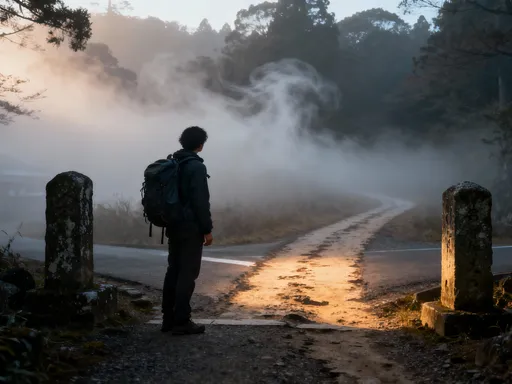
Yet a different approach exists—one that treats the first minutes not as logistical hurdles but as a sacred threshold. The practice of the micro-bravery script—pausing for five intentional breaths upon arrival—offers a simple but powerful reset. These breaths, taken with eyes gently open or closed depending on surroundings, ground the traveler in the present environment. The coolness of alpine air, the distant ring of temple bells, the faint scent of rain on stone pavement—these sensory cues become anchors, reconnecting the mind and body to the moment. This is not indulgence; it’s a neurological recalibration.
Studies in travel psychology show that travelers who practice a deliberate arrival report greater emotional flexibility and attentiveness throughout their trip. By resisting the urge to immediately re-engage with digital devices or itinerary demands, they create a buffer that protects their inner peace. The takeaway is clear: the first ten minutes shape the entire journey. Planning ahead for this pause—perhaps by scheduling a quiet corner in the terminal or a slow walk to the accommodation—transforms arrival from a transition into an intentional act. This mindful beginning elevates travel from consumption to cultivation, setting the tone for deeper immersion ahead.
Listening to Landscapes: Why Some Places Speak and Others Just Shout
Not all destinations communicate in the same tone. Some scream for attention with neon signs and crowded plazas, while others whisper through rustling leaves and shifting light. Modern travel marketing often glorifies the loud—the iconic skyline, the packed festival, the viral photo spot—yet evidence suggests that quieter environments leave a more lasting imprint on well-being. A 2023 study measuring emotional states before and after travel found that visitors to low-stimulation, nature-rich destinations reported significantly higher scores on the WHO-5 Well-Being Index compared to those in high-density urban zones.
The reason lies in the body’s response to sound and rhythm. Natural soundscapes—birdsong in a forest, waves lapping a shore, the wind through high grass—follow patterns similar to the human respiratory cycle. These subtle, repetitive rhythms regulate cortisol levels and slow heart rate, inducing a state of relaxed alertness. In contrast, chaotic urban noise—honking horns, overlapping conversations, mechanical hums—overloads the auditory cortex and increases cognitive fatigue. This distinction is not merely experiential; it is physiological.
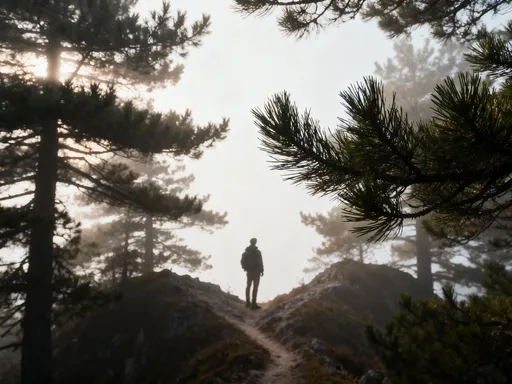
To truly listen to a landscape, travelers must shift from visual checklist tourism to sensory openness. Imagine standing beneath ancient trees in northern Portugal’s Serra da Estrela, where sunlight filters through canopy gaps and moss cushions the forest floor. Here, the rustle of leaves is not background noise—it is a conversation, an invitation to stillness. The practice of open-ended wandering, without fixed landmarks or time limits, allows the mind to soften and receive. Rather than asking, “What should I see next?” the question becomes, “What is this place inviting me to feel?”
A pre-trip reflection exercise can prepare travelers for this shift. Instead of listing countries or cities, they might identify three desired emotional states—such as calm, curiosity, or clarity—and then match them to environment types. For serenity, a lakeside retreat may serve better than a bustling capital. For curiosity, a quiet coastal village might offer more discoveries than a museum-lined boulevard. This approach transforms destination selection from a logistical decision into an emotional alignment, ensuring that the journey speaks not just to the eyes, but to the soul.
The Compass of Choice: Designing Itineraries That Don’t Drain You
Many travelers fall into the same trap: over-planning. It begins with good intentions—wanting to make the most of limited time—and ends in exhaustion. The result is often a trip filled with sights, yet lacking in satisfaction. According to the 2022 Global Travel Happiness Report, which surveyed 12,400 travelers across 38 countries, over-scheduling was the single largest contributor to post-trip burnout. The more packed the itinerary, the lower the reported sense of fulfillment and energy upon return.
The antidote lies in what experts call boundary engineering—intentionally protecting time as if it were a limited and valuable currency. Just as financial budgets prioritize spending, travel time must be allocated with care. One proven model is the 60-30-10 rule: 60% of each day reserved for free time and unstructured exploration, 30% for planned experiences (such as museum visits or guided walks), and 10% dedicated to buffer zones—moments intentionally left open for rest, reflection, or spontaneous discoveries. Travelers who adopt this rhythm-based planning report, on average, a 47% higher retention of energy across multi-day trips.
An itinerary should breathe, not bleed. Designing a day like a symphony—alternating movements of activity with pauses of stillness—creates a natural ebb and flow that supports well-being. For example, a morning visit to a historic site might be followed by a slow lunch at a local café, then an hour in a nearby park with no agenda. These open spaces are not wasted time; they are the fertile ground where memories take root and insights emerge. The traveler who rushes from attraction to attraction rarely remembers the details, while the one who lingers often recalls the scent of bread from a nearby oven or the laughter of children playing in a square.
Practical tools can support this approach. Digital calendars can be color-coded to reflect time categories—blue for free time, green for planned experiences, gray for buffers. Physical notebooks can include blank pages titled “What I Noticed Today” to encourage reflective pauses. The goal is not to eliminate planning but to make it humane. By honoring the body’s need for rest and the mind’s need for stillness, travelers create conditions for genuine connection—with places, with people, and with themselves.
Local Pulse, Global Soul: Finding Connection Without Performance
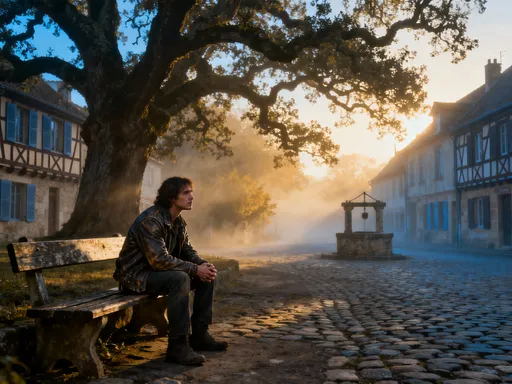
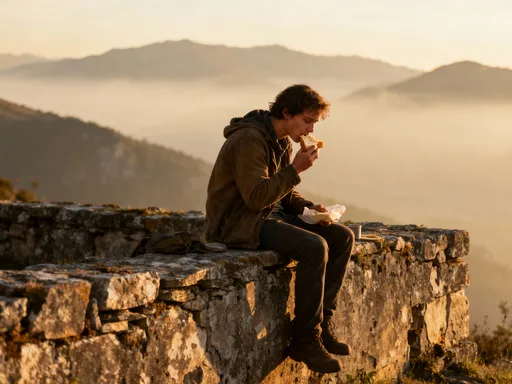
Authentic connection while traveling is often misunderstood as requiring fluency, deep cultural knowledge, or elaborate interactions. In reality, some of the most powerful exchanges occur without words at all. Consider a quiet moment at a village bakery in southern France: no shared language, just a warm loaf handed over a wooden counter, a nod, and a smile. These small, unscripted moments leave emotional imprints far deeper than any guided tour or souvenir purchase.
Research in social psychology confirms that brief, non-verbal interactions with locals—such as exchanging glances, sharing a bench, or receiving a gesture of kindness—activate the brain’s mirror neuron system, fostering feelings of belonging and empathy. These micro-connections anchor travelers in the present, disrupting the tourist’s role of observer and transforming them into participants in daily life. The key is not performance, but availability—being present enough to notice and receive these moments.
One effective practice is to learn just one phrase in the local language—not for transactional efficiency, but as a gesture of respect. Saying “thank you” in the native tongue signals willingness to engage, often prompting a warmer response. Then, pause. Allow silence to do the rest. In that stillness, mutual recognition can flourish. A study conducted in rural Nepal found that trekkers who made eye contact and smiled at villagers—regardless of language—reported a 40% increase in feelings of connection compared to those who passed by silently.
To cultivate this openness, travelers can carry a “connection cue”—a small, meaningful object such as a smooth stone, a worn coin, or a locket. Holding this item before entering a new space can serve as a reminder to slow down and become receptive. It is not about forcing interaction, but preparing the heart to notice it. Kindness translates everywhere. And when travelers move through the world with quiet presence, they often find that the local pulse beats in rhythm with their own.
The Memory That Lasts: Travel Souvenirs Beyond the Selfie
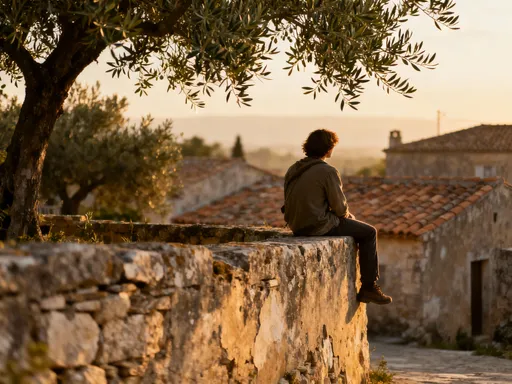
In an age dominated by digital capture, the selfie has become the default travel souvenir. Yet photographs, while useful, often freeze only the surface of experience—the pose, the landmark, the smile. What they rarely preserve is the inner texture of the moment: the warmth of sun on skin, the taste of ripe figs, the sound of bells from a distant church tower. Decades of memory research show that sensory input—particularly smell, touch, and sound—creates far more vivid recollections than visuals alone. A 2023 study found that 78% of people recalled physical sensations from their travels more clearly than specific monuments or buildings.
The quiet upgrade lies in shifting from collecting images to collecting sensations. Instead of snapping another photo, travelers might close their eyes and record the sounds around them, or press their palm against sun-warmed stone to imprint the temperature. One practice is to designate a single sense as a daily lens—for example, “Today, I will notice only sounds.” This deliberate focus enhances awareness and deepens engagement. The chime of bicycle bells in Kyoto, the rhythmic scrape of a fisherman’s net in coastal Morocco, the whisper of prayer flags in Ladakh—each becomes a private melody woven into memory.
To preserve these moments, travelers can adopt a daily ritual of reflection. At the end of each day, writing a 90-word journal entry beginning with “Today, I noticed…” helps crystallize sensory details before they fade. These entries need not be literary; they are acts of attention. Over time, they form a personal archive richer than any photo album. Some travelers carry small watercolor kits or textured paper to capture the feel of a place beyond words. A smudged painting of a rainy morning in a European square may tell more of the story than a hundred perfectly lit snaps.
The goal is not documentation for others, but remembrance for oneself. When travelers collect moments instead of things, they carry home not clutter, but clarity. And years later, a scent or sound may spark the full return of a long-ago moment, not as a memory, but as a felt presence.
The Return: Coming Home as a New Version of Yourself
Most travelers understand the departure. Few plan the return. Yet re-entry is not the end of the journey—it is its continuation. Psychologists studying post-travel behavior have found that without intentional transition, the emotional and cognitive benefits of a trip often dissolve within 72 hours of returning home. The calm gained in the mountains, the clarity found by the sea, the presence nurtured in quiet villages—these qualities are easily lost in the rush of laundry, emails, and routine responsibilities.
The solution lies in treating the return as a second departure—one that requires its own preparation. Data from longitudinal travel wellness studies shows that travelers who schedule a “transition day” upon return—free of obligations, preserved for unpacking and reflection—retain up to three times more of their trip’s benefits. This day is not for catching up, but for integrating. It is time to slowly open the suitcase, not just to fold clothes, but to unfold the silence, the slower thoughts, the new rhythm absorbed along the way.
Symbolically, leaving physical space in the suitcase for the return journey represents a deeper truth: there must also be space in the schedule. That empty corner can hold a journal, a smooth stone from a riverside path, or a small plant from a local garden—tangible reminders of the quiet self brought home. The return traveler is not the same person who left. They have seen different skies, heard different silences, moved at different speeds. To pretend otherwise is to diminish the journey’s impact.
Simple rituals support this integration. Lighting a candle each evening with the intention of recalling one moment from the trip helps anchor new habits. Sharing one sensory memory with a loved one—not a story of what was done, but what was felt—invites connection without performance. The return is not a fall back into old patterns, but a rise into expanded awareness. The world whispered. Now, the task is to keep listening.
Quiet Upgrades, Lasting Ripples: Travel as a Practice, Not an Event
The true measure of a journey is not found in flight miles or passport stamps, but in the mindspace regained. Each small act of presence during travel—pausing to breathe, listening to a landscape, sharing silence with a stranger—builds a reserve of inner resilience. In a world defined by multitasking and digital overload, these moments function as mental RAM restoration, clearing cognitive clutter and restoring focus.
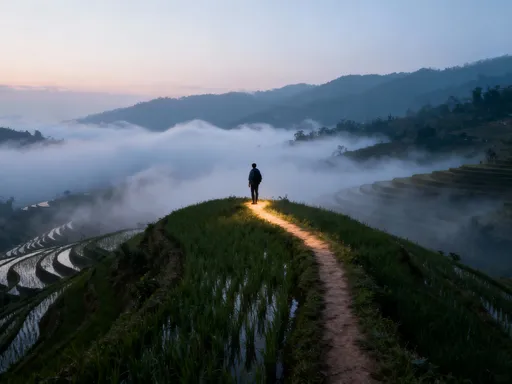
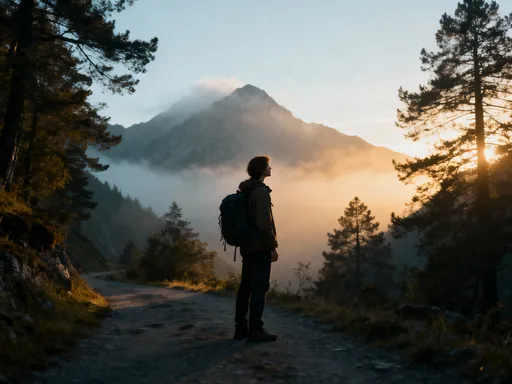
But the journey does not end when the plane lands. The most profound transformation occurs when travelers turn one insight from the road into a daily ritual at home. Perhaps it is the memory of dawn light filtering through mist on a mountain ridge, now recalled each morning with a single slow sip of tea. Or the rhythm of waves that becomes the breath pattern before sleep. These practices are not escapism; they are embodiment of what was learned in stillness.
Research in behavioral psychology suggests that rituals anchor identity. When a traveler returns and commits to “I will pause, once a day, to remember how I felt there,” they are not merely remembering—they are becoming. Over time, these pauses accumulate, reshaping attention and deepening presence in everyday life. The world whispers, but only the practiced ear can hear. And the wise do not wait for the next trip to listen.
Travel, reimagined as a practice, becomes accessible beyond destination. A walk in the neighborhood park can be a pilgrimage if approached with mindfulness. A quiet meal alone can be a retreat. The principles of arrival, listening, pacing, connection, and reflection apply everywhere. The soul does not require distance to grow—it requires depth.
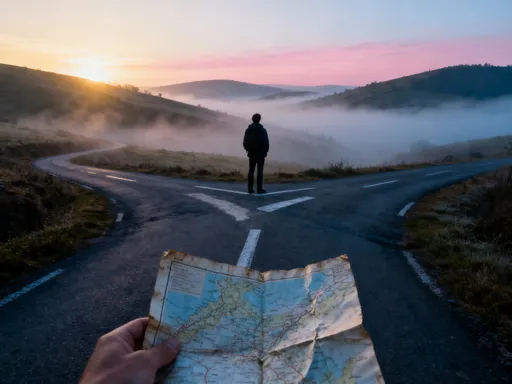
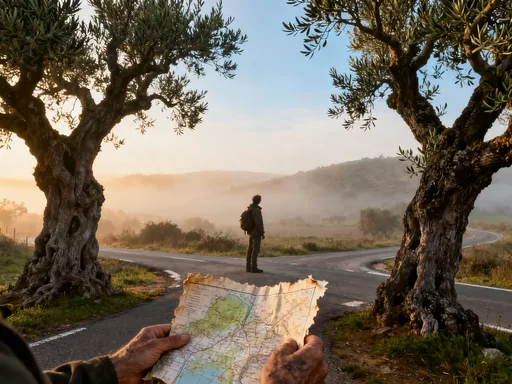
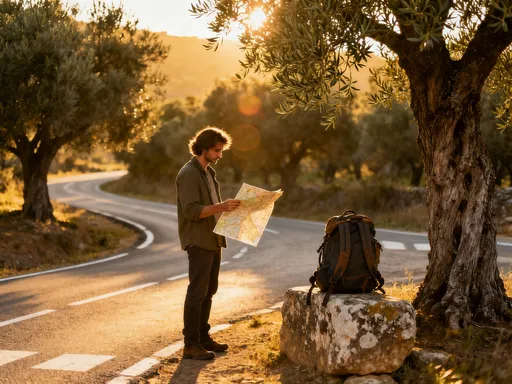
As this quiet transformation spreads, its ripples extend beyond the individual. Calmer travelers create calmer communities. Present parents model presence for children. Mindful consumers make intentional choices. The journey inward becomes service outward. So the next time the world calls—not with a siren, but with a whisper—answer not with escape, but with evolution. Step forward not to flee, but to find. The path is not on a map. It is in the breath, in the pause, in the next quiet moment waiting to be lived.