Wander Wiser: The Art of Choosing Where to Go Next
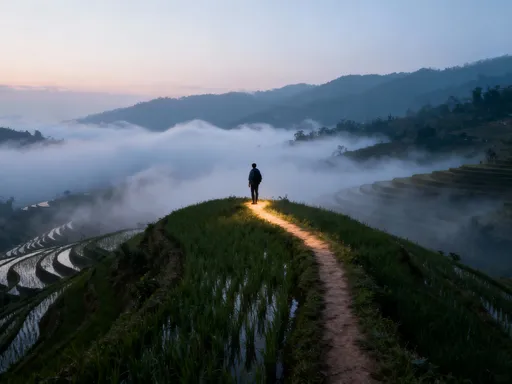
Every year, millions set out in search of beauty, meaning, or simply a change of air—yet few return having truly found what they sought. The world is vast, distractions are endless, and the pressure to 'see it all' often leads to burnout, not breakthrough. Travel, at its best, is not about accumulation, but transformation. It’s about selecting destinations with intention, engaging deeply, and returning with more than just photos. This journey begins long before departure—with thoughtful choices rooted in purpose, not impulse. The destinations we choose become the canvas upon which we paint personal growth, emotional reset, and quiet revelation. Choosing wisely doesn’t mean chasing faraway lands; it means aligning location with longing, rhythm with reflection. In doing so, travel becomes less an escape and more a homecoming—to ourselves.
Why the Right Destination Matters
The distinction between a forgettable trip and a life-shifting journey often lies not in the destination’s fame, but in its fit. A beach in Bali might offer serenity for one traveler and restlessness for another. The right destination isn’t the most photogenic or the most trending—it’s the one that resonates with an inner need, whether that’s solitude, connection, or creative renewal. Studies in environmental psychology show that settings aligned with personal values enhance mood, reduce anxiety, and support memory formation. For instance, a 2022 study from the University of Exeter found that participants who traveled to environments matching their preferred sensory profile—such as quiet woodland for introspective individuals—reported 43% higher emotional satisfaction post-trip compared to those in mismatched locations.
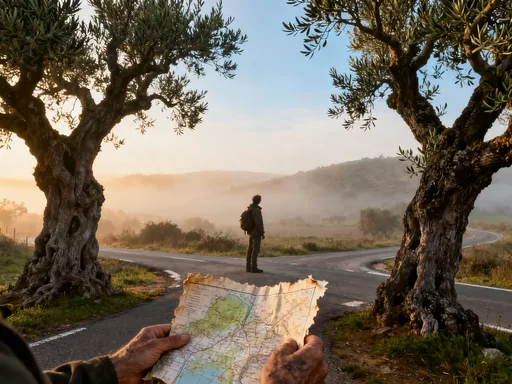
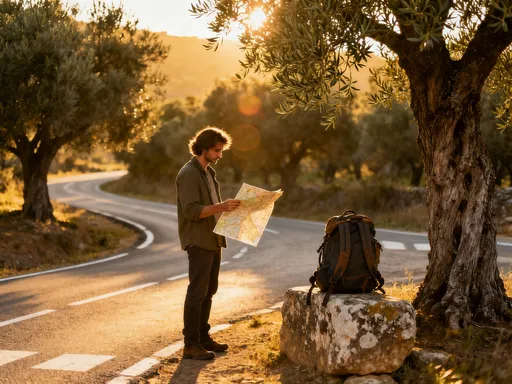
Consider the woman from Toronto who, overwhelmed by city life, chose a week-long stay in rural Alentejo, Portugal. With no agenda beyond walking olive groves and sharing meals with local families, she returned not only rested but reoriented, describing the experience as 'a course correction for the soul.' Contrast this with a whirlwind tour of five European capitals in ten days, where sights blur and exhaustion overrides insight. The difference lies in intentionality. When a destination echoes a traveler’s internal state or desired growth, the experience deepens organically. Kyoto provides another powerful example, where visitors who engage in contemplative practices—tea ceremonies, temple meditation, or even mindful strolling through bamboo groves—often report sustained increases in mindfulness lasting weeks after return.
Much of modern travel, however, operates on impulse—shaped by social media highlights, last-minute deals, or peer pressure. This reactive approach turns travel into consumption rather than communion. The shift begins with recognizing that destination selection is the first and most crucial design decision of any journey. It is not merely logistical; it is psychological. Once travelers understand that place exerts a quiet but persistent influence on perspective, they can begin to curate trips not for quantity of sights, but for quality of presence. The goal is no longer to check off landmarks, but to be changed by the places we visit—subtly, gently, and with lasting effect.
Mapping Your Travel Temperament
Just as no two fingerprints are alike, no two travel preferences are identical. One person thrives in bustling markets, absorbing energy from crowds, while another finds peace only in remote mountain huts. To choose wisely, travelers must first understand their own travel temperament—a blend of pace, environmental preference, desired level of interaction, and underlying purpose. This self-awareness acts as an internal compass, guiding choices away from trend-driven decisions and toward experiences that truly nourish.
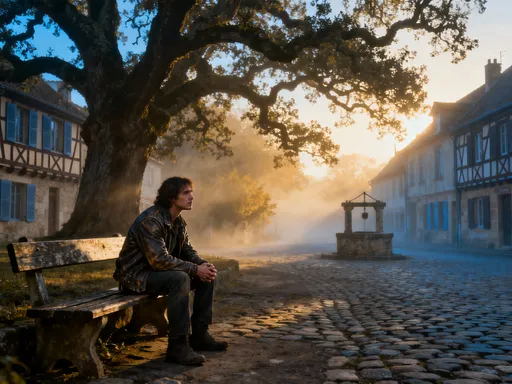
Imagine travel temperament as a musical genre. Some travelers are jazz lovers—drawn to improvisation, spontaneity, and sensory richness. They thrive in cities like Lisbon or Istanbul, where wandering leads to unexpected discoveries. Others are classical listeners—appreciating structure, silence, and detail. They may find deep satisfaction in the order of Kyoto’s gardens or the quiet precision of a Scandinavian retreat. Still others are folk travelers—seeking authenticity, connection, and local stories—drawn to slow villages in Umbria or coastal fishing communities in Vietnam. Recognizing this metaphor allows travelers to pause and ask: what kind of rhythm am I seeking?
Practical tools can aid this reflection. A simple exercise is to review past trips and rate them not by landmarks visited, but by post-trip energy levels and emotional clarity. Did a quiet cabin in Norway leave you recharged, while a theme park vacation drained you despite the fun? These patterns reveal preferences. Digital travelers can use mood-tracking apps to log emotions during trips, later analyzing which environments correlated with peace or inspiration. Some tour operators now offer temperament assessments, matching clients to destinations based on personality profiles rather than demographics.
The goal is not to box oneself into a category, but to build self-knowledge. A traveler who values deep connection might prioritize homestays and language exchange, while one seeking restoration may focus on thermal springs and digital detox zones. When maps are aligned with minds, the destination ceases to be a random dot on a globe and becomes a deliberate step toward well-being. This introspective work—often overlooked—is the quiet foundation of transformative travel.
Beyond the Algorithm: Finding Hidden Gems
In an age where travel recommendations are filtered through algorithms designed for engagement, not enlightenment, the path to discovery has become crowded. The same ten beaches, cafes, and viewpoints dominate feeds, often leaving travelers feeling they’ve seen it all before—even on their first visit. Yet beyond the digital noise lies a world of underappreciated places, rich in authenticity and low in crowds. These hidden gems are not accidents; they are found through curiosity, patience, and a willingness to look beyond the first page of search results.
Local newsletters, often overlooked by international travelers, are treasure troves of insight. A weekly dispatch from a bookshop in Lyon or a bakery in Ljubljana can reveal seasonal festivals, neighborhood walks, or family-run wineries never listed on major platforms. Similarly, off-season travel guides—produced by regional tourism boards aiming to extend visitation beyond peak months—highlight quieter alternatives with fuller hospitality. The Drôme region in southeastern France, for example, offers lavender fields, perched villages, and artisan workshops with a fraction of the tourists found in Provence. Here, travelers sip wine with vintners who remember their names and walk ancient trails without encountering another soul.
Slovenia’s Karst region presents another compelling case. While most visitors flock to Lake Bled, the Karst offers a different rhythm—cave systems older than memory, hilltop castles with panoramic views, and a culinary tradition centered on prosciutto and teran wine. Locals speak of the land with reverence, and travelers who take time to listen often leave with a sense of having touched something enduring. These destinations do not rely on spectacle; they offer depth. The shift from consensus to curiosity transforms travel from mimicry to meaning. A simple change—reading a regional archive at a public library, joining a slow travel Facebook group, or writing to a local tourism office—can open doors algorithms never suggest.
The reward is not just exclusivity, but authenticity. In lesser-known places, interactions are more genuine, routines more visible, and time feels less pressured. Travelers report higher levels of presence and connection in such settings, precisely because they are not performing for an audience—digital or otherwise. By stepping off the well-lit path, travelers reclaim the essence of exploration: not to confirm what others have seen, but to witness what speaks to them.
The Rhythm of Arrival: Designing the First 24 Hours
The first day of a trip sets the tone for everything that follows. Too often, travelers rush from airport to itinerary, mistaking speed for efficiency. Yet the moments after arrival—the first meal, the first walk, the first moments of stillness—hold disproportionate power in shaping overall experience. This period, often chaotic and disorienting, can be transformed into a ritual of grounding, helping travelers shed the stress of transit and open to their new surroundings.
Consider the sensory checklist: the hum of a foreign language, the scent of local bread or blooming jasmine, the texture of cobblestones underfoot. These details, when noticed, anchor awareness in the present. A traveler who takes ten minutes to sit on a hotel balcony and simply listen to the neighborhood sounds—children laughing, a distant church bell, the rustle of laundry in the wind—often reports a quicker sense of arrival than one who immediately sets off to tick off attractions. This practice, sometimes called 'sensory unpacking,' helps the nervous system adapt and reduces the mental fog of travel fatigue.
Practical rituals can support this transition. Carrying a small notebook to jot down first impressions creates a personal record that deepens memory. Scheduling 'arrival stillness'—a 30-minute pause before any sightseeing—allows emotional recalibration. In Kyoto, some retreat centers offer a 'welcome tea' ceremony for arriving guests, symbolizing the shedding of past burdens and the opening to new experience. While not every traveler can access such formalities, the principle remains: begin softly.
Navigational tools also play a role. Instead of overwhelming oneself with maps and apps, a single printed guide with key locations and emergency phrases can reduce cognitive load. Learning basic courtesies—'hello,' 'thank you,' 'excuse me'—in the local language signals respect and often opens doors to warmer interactions. Arrival architecture, as it might be called, is not about rigid planning, but about creating a gentle on-ramp to immersion. When the first hours are handled with care, the entire journey unfolds with more grace.
Engagement Over Itineraries: Deepening the Experience
In an age of optimized routes and timed entries, many travelers measure success by how much they’ve seen. Yet the most enduring travel memories rarely come from checked boxes. They arise from moments of unscripted connection: the laughter shared over a mispronounced toast in a Naples trattoria, the silence felt while sketching a centuries-old doorway in Marrakech, the quiet exchange with a vendor who teaches you how to peel a dragon fruit.
These experiences emerge not from itineraries, but from presence. Instead of rushing from museum to market to monument, transformative travel invites a slower, deeper engagement. Spending three hours in a single market—observing routines, sampling seasonal fruits, learning the names of herbs—can yield more insight than three days of whirlwind sightseeing. The shift is from productivity to openness, from doing to being.
Consider the traveler in Oaxaca who, instead of joining a guided tour, spent a morning at a local weaving cooperative. She didn’t buy anything that day, but she watched the rhythm of the loom, asked about dyeing techniques, and shared a mango with an elderly artisan. Months later, she still recalls the woman’s hands, the scent of cochineal, and the sense of time suspended. This is the emotional payoff of engagement. When travelers allow themselves to be curious without agenda, they step into the living fabric of a place.
Simple practices can foster this mindset. Learning five local phrases—even just 'How are you?' and 'Beautiful weather'—builds bridges. Carrying a sketchbook or journal invites mindfulness. Sharing a meal with strangers, whether at a communal table or a neighborhood festival, dissolves the barrier between observer and participant. These acts are not grand gestures, but small choices that accumulate into profound shifts. The success of a journey is not measured in photos uploaded, but in the quiet ways it changes how we see the world—and ourselves.
The Practical Framework: Packing, Planning, and Flexibility
Thoughtful preparation does not diminish spontaneity; it protects it. Travelers who arrive burdened by logistical stress—lost reservations, ill-fitting clothes, budget overruns—have less bandwidth for wonder. Conversely, those who master the basics create space for serendipity. The key lies in balance: a foundation of preparation, overlaid with openness to change.
Packing offers a prime example. Minimalist strategies, rooted in climate and cultural norms, reduce decision fatigue. A capsule wardrobe of versatile pieces—neutral colors, layerable fabrics—can serve multiple settings without excess weight. Travelers to Mediterranean climates might pack a light scarf that doubles as sun protection, a beach cover-up, or evening shawl. Those visiting conservative regions benefit from researching dress codes in advance, ensuring they can move through spaces with ease and respect. The principle is not deprivation, but intention—bringing only what supports comfort and connection.
Planning follows a similar rhythm. The '70/30 Rule' offers a useful framework: 70% planned structure, 30% open space. This means securing key reservations—flights, first-night lodging, major tickets—while leaving room for discovery. A traveler in Lisbon might plan a visit to the tile museum but keep an afternoon free to follow the tram to a neighborhood she’s never heard of. This balance prevents the paralysis of over-scheduling while avoiding the anxiety of total improvisation.
Digital tools can support this approach. Apps that consolidate reservation codes, transit passes, and budget tracking reduce mental clutter. Yet analog habits remain vital: a physical notebook for reflections, a printed map for unplugged wandering, a simple daily check-in to assess energy and mood. Smart logistics do not serve efficiency alone; they serve presence. When the practical is handled with care, the soulful has room to unfold.
Returning Home: Carrying the Journey Forward
The end of a trip is not marked by the plane’s landing, but by the reintegration of its lessons. Too often, travelers return home only to lose the clarity they gained abroad. The rhythm of daily life rushes back, and the insights from distant places fade like photographs left in the sun. Yet the final phase of travel—reentry—holds untapped potential. With intentional practices, travelers can transform fleeting inspiration into lasting personal evolution.
Rituals of return can bridge this gap. Writing an 'arrival letter' to oneself—reflecting on what changed, what surprised, what must be carried forward—creates a tangible record of growth. Creating physical mementos, such as a journal with pressed flowers, ticket stubs, or a small object from the journey, anchors memory in the body. Some travelers schedule 'debrief walks' in their own neighborhoods, revisiting familiar streets with the eyes of a traveler, noticing details previously overlooked.
More profoundly, travelers can identify one insight to integrate into daily life. Was it the slower pace of a Tuscan village? The warmth of community in a Greek island town? The quiet resilience of a mountain guide in Nepal? Bringing that quality home—whether through morning stillness, neighborly greetings, or time in nature—keeps the journey alive. One woman from Seattle began hosting monthly 'global dinners' after her trip to Morocco, inviting friends to share stories and food from different cultures. What began as nostalgia became a practice of connection.
The invitation, then, is not to wander more, but to wander wiser. To choose destinations with purpose, to travel with presence, and to return with intention. In doing so, travel ceases to be an escape and becomes a practice—a way of living more fully, wherever we are. The world is not a checklist. It is a mirror, reflecting back to us who we are, and who we might become.