The Quiet Art of Travel That Transforms
Every journey begins with a heartbeat—an unspoken pull toward something beyond routine. As borders shift and plans unravel, the true traveler adapts not through haste, but through intention. This is not about ticking off landmarks, but about weaving care into movement. When the world feels unpredictable, the wisest path forward is not speed, but clarity forged through design. Travel, at its best, becomes a quiet act of reconnection—with places, with self, and with purpose. In an age of constant motion, the most transformative journeys are no longer defined by distance, but by depth. This is the quiet art of travel: a practice rooted in mindfulness, resilience, and presence, where every choice—from destination to daily rhythm—becomes a step toward renewal.
The Compass Reset: Realigning Travel With Intention
Modern travel has increasingly become a transactional ritual—book, fly, photograph, return. It is often measured in checklists: number of countries visited, Instagrammable moments captured, meals consumed at famed restaurants. Yet beneath the surface of such activity, many travelers report a growing sense of emptiness. The thrill of arrival fades quickly; the memories blur. What’s missing is not the destination, but the intention. Travel with purpose does not require epic quests or distant continents. It begins with a shift in mindset: from consumption to communion.
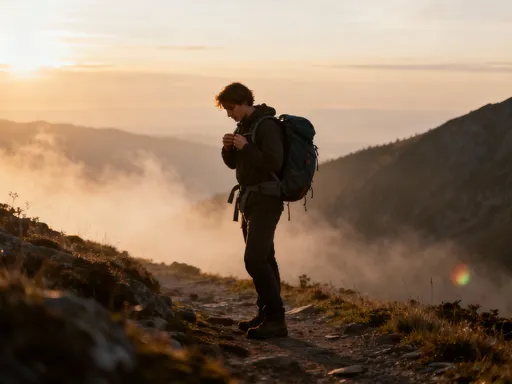
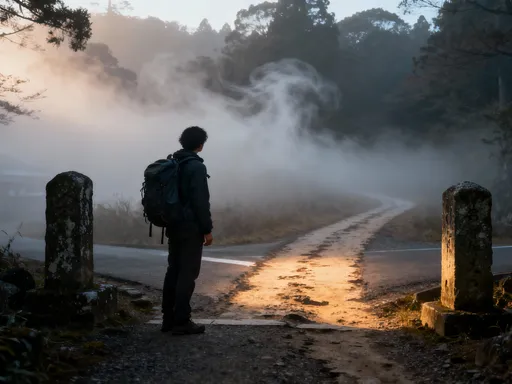
Consider a woman standing at the edge of a mountain trail in northern Spain. She adjusts her backpack, not simply to redistribute weight, but to center herself. She takes three breaths before stepping forward. This pause is not incidental—it is intentional. It marks the beginning of a different kind of journey, one where the act of moving through space is also a movement inward. Intention, in this sense, becomes the invisible compass guiding each decision, from how early to rise to whether to linger in a village café or rush to the next site.
Intention shapes experience far more than destination does. A trip to a well-known city can feel hollow if approached with distraction, while a simple weekend in a nearby forest can become life-altering when entered with presence. The key lies in what psychologists call boundary engineering—the deliberate design of structures that protect mental and emotional space during travel. This might mean setting a no-screen rule after 7 p.m., committing to one mindful meal per day, or scheduling silence between activities. These are not restrictions, but invitations to depth.
To cultivate intention, travelers can adopt a brief pre-trip reflection protocol. Three simple questions can serve as anchors: What do I need most right now—rest, inspiration, connection? What emotional state do I wish to carry into this journey? And what am I willing to release—urgency, overplanning, the need for control? Answering these honestly creates a psychological blueprint, one that guides choices not through obligation, but alignment. When travel is rooted in such clarity, even the smallest moments—a shared smile with a stranger, the scent of rain on warm stone—carry weight.
Destination Alchemy: Choosing Where to Matter
The choice of where to go is often guided by habit, hype, or habitually curated social feeds. The availability heuristic—a cognitive bias that favors familiar, easily recalled examples—leads many to select destinations based on popularity rather than personal resonance. Paris, Bali, Santorini—each undeniably beautiful, but not inherently right for every traveler. In an era of overtourism and shifting travel policies, smarter destination selection is not just preferable; it is essential.
Data from Eurostat (2023) reveals a significant shift in European travel patterns: off-peak season visits increased by 37% compared to pre-pandemic levels, with travelers citing fewer crowds, deeper engagement with local life, and better value as primary motivators. These figures reflect a quiet recalibration—people are beginning to prioritize presence over prestige. A trip to a coastal village in Portugal during the shoulder months of May or September may offer more intimacy, more serenity, and more authentic interaction than the same location in August, when every café is packed and every path crowded.
Choosing a destination should not be a passive act of booking convenience. Instead, it should be an alchemical process—transforming personal needs into place-based solutions. This means tilting structures toward care: selecting locations not for their fame, but for their capacity to restore. A meaningful destination aligns with three key criteria: safety, sensory ease, and space. Safety goes beyond political stability; it includes emotional security—does this place feel welcoming to someone seeking peace? Sensory ease refers to the environment’s ability to support calm—does it have soft light, natural sounds, breathable air? And space—both physical and social—allows for movement without pressure, for solitude without isolation.
Take, for instance, a woman choosing between two options: a bustling city known for its museums or a quiet lakeside town in Slovenia. The first promises cultural richness, but also noise, lines, and decision fatigue. The second offers walking paths, silence, and slow mornings by the water. If her primary need is emotional reset, the second choice, though less prestigious, may be more transformative. The real measure of a destination’s value is not its ranking on travel lists, but its resonance with the traveler’s inner state. When we choose where to go with this kind of discernment, we stop visiting places and begin meeting them.
Rhythm Over Rush: Building Travel Routines That Stick
One of the most common sources of post-travel exhaustion is not the journey itself, but its pace. Hyper-packed itineraries—four cities in ten days, five sights per morning—create cognitive overload rather than enrichment. Research from the University of Surrey (2022) found that travelers following dense schedules reported 42% higher levels of decision fatigue and 31% lower memory retention of experiences. Joy is not proportional to activity; it flourishes in rhythm, not rush.
The antidote lies in designing daily travel rhythms—a framework of structured flexibility that honors natural energy cycles. Rather than filling every hour, this approach divides the day into three intentional phases: morning stillness, midday immersion, and evening integration. Each phase serves a psychological function. Morning stillness—20 to 30 minutes of quiet, perhaps with tea, journaling, or light stretching—grounds the traveler in the present. It is not wasted time; it is foundational.
Midday immersion is the period of engagement—visiting a market, hiking a trail, exploring a museum. But unlike the tourist who rushes from one box to the next, the intentional traveler enters each experience with full attention. Consider a traveler in Kyoto who participates in a tea ceremony not as a photo opportunity, but as a ritual of presence. The slow pouring of water, the precise whisking of matcha, the silence between sips—each detail becomes a meditation. She does not rush to the next site. She allows the experience to settle.
Evening integration completes the rhythm. This is a time for reflection—reviewing the day’s moments, writing briefly, or simply sitting with a view. It allows the mind to process rather than accumulate. A crucial element of this rhythm is the “ritual buffer”: a 90-minute gap intentionally left between activities. This is not downtime; it is reset time. It could be spent reading in a park, sketching in a notebook, or sipping herbal tea at a quiet bench. These pauses are not luxuries; they are cognitive necessities.
A sample rhythm template might look like this: 7:00 a.m. wake with water and stillness; 8:30 a.m. light breakfast and walk; 10:00 a.m. first experience; 1:00 p.m. lunch and rest; 3:00 p.m. second experience; 5:30 p.m. buffer time; 7:00 p.m. dinner and reflection. Whether in a city or a mountain cabin, this structure can be adapted to fit context. The result is not just less fatigue, but richer memory, deeper connection, and a sense of wholeness that lasts beyond the return flight.
The Unseen Itinerary: Designing for Emotional Resilience
Beneath the surface of every journey runs an emotional current—loneliness, disorientation, subtle grief, or unexpected joy. These undercurrents are rarely mentioned in guidebooks, yet they shape the quality of travel more than any itinerary. A single missed train, a misunderstood gesture, or a quiet evening in a hotel room can trigger waves of unease. When unacknowledged, such emotions accumulate, dulling perception and eroding resilience.
The concept of the “emotional pre-wellness check” offers a remedy. Before departure, travelers are invited to inventory their mental and emotional bandwidth. Are they carrying unresolved stress? Are they grieving a loss? Are they seeking escape or growth? Understanding one’s inner landscape allows for more compassionate planning. A person in emotional transition may benefit from a trip with minimal decision-making, while someone seeking inspiration may thrive with curated challenges.
Think of travel as a melody, not a checklist. In music, the pauses—the silences between notes—are as essential as the sounds. So too in travel, the unstructured moments allow experience to breathe. Anonymized journal entries from travelers reveal this truth repeatedly. One woman wrote: “I was fine until I saw a child laughing in a language I didn’t understand. I burst into tears. I realized I missed my daughter, though I hadn’t admitted it.” Another noted: “I kept changing plans because I felt restless. Later, I saw it was anxiety—I was afraid of stillness.”
To honor these rhythms, a “care-based itinerary” can be designed—one that includes emotional safeguards. At minimum, it should protect one hour per day for solitude, journaling, or stillness. This is not indulgence; it is maintenance. It might mean declining an invitation to dinner to read under a tree, or spending an hour in a quiet church instead of a crowded museum. The key is to build space for emotional processing.
Equally important is learning to translate instinct into protocol. A hunch—not to board a certain bus, to extend a stay, to speak to a stranger—should be treated as data, not dismissed as irrational. The body often knows before the mind. When travelers learn to trust these signals, they move from reactivity to responsiveness. They are no longer at the mercy of external pace, but in dialogue with their internal rhythm. In this way, travel becomes not just a change of place, but a deepening of self.
Local Gravity: Moving With, Not Through, Communities
The “tourist gaze” is a well-documented phenomenon—the tendency to see local life as spectacle, to observe rather than participate. This creates a subtle but real disconnect. Residents of popular destinations often feel objectified, their daily routines turned into performances. Surveys in Amsterdam (2023) found that 68% of long-term residents felt “overwhelmed” by tourist traffic, with many reporting loss of access to their own neighborhoods, rising rents, and cultural erosion. Overtourism is not just an environmental issue; it is a human one.
A different way of moving is possible—one defined not by passing through, but by arriving with respect. This is the principle of local gravity: allowing the rhythm and values of a place to gently pull the traveler into alignment. It begins with slowing down. A traveler in Nepal, for example, might begin her day by sharing breakfast with a local family. No translator, no agenda—just tea, a few exchanged words, and the warmth of shared presence. She learns one phrase: “Dhanyabad” (thank you). It is not perfect, but it is real.
Connection does not require fluency. It requires humility and presence. It means asking permission before photographing a street vendor, visiting a neighborhood market instead of a tourist mall, or learning one cultural norm deeply—such as removing shoes before entering a home, or the significance of a local festival. These are not performance acts; they are gestures of dignity.
Alternative experiences are increasingly available. Homestays, where travelers live with families, offer immersion far beyond hotels. Local workshops—pottery, cooking, weaving—create bridges of skill and story. Silent walks with community guides, where observation replaces commentary, foster deeper attention. In Lisbon, a group of women over fifty participate in weekly “listening walks,” where they walk without speaking, absorbing the city’s sounds—seagulls, trams, distant fado music. One participant said, “I felt the city breathe. I didn’t need to own it. I just needed to be in it.”
When travelers move with, not through, communities, they shift from consumption to reciprocity. They do not take; they receive and return. This is not about guilt, but grace. It is about remembering that every place is someone’s home. And in that recognition, a quiet transformation occurs—not just in the traveler, but in the way they carry the world afterward.
Return Mapping: Bringing the Journey Home
The return journey is often the most neglected phase of travel. The flight home is booked, the suitcase unpacked within hours, and life resumes as if nothing changed. Yet research from the Journal of Travel Research (2021) shows that many travelers experience post-trip identity dissonance—they return with new perspectives but slip back into old patterns, leading to a sense of loss or fragmentation. The journey ends, but the transformation is left unharvested.
Reentry must be treated as an essential part of the journey, not an afterthought. A return ritual can anchor the transition. This might begin with unpacking slowly—taking a day to lay out clothes, souvenirs, and notes, not to tidy, but to reflect. Each item becomes a memory node. A worn scarf, a pressed flower, a train ticket—each carries a story. Another ritual: writing a farewell letter to the place visited. “Dear Kyoto,” one woman wrote, “thank you for the quiet mornings by the koi pond. I will miss your stillness. I promise to carry it with me.”
A “transition day” before returning to work can also create space. No emails, no errands—just rest, reflection, and integration. This allows the mind to shift gears without shock. During this time, travelers can archive insights—not just photos, but reflections paired with them. A digital album titled “Moments That Mattered” might include a snapshot of a mountain path with the note: “I felt free here. I remembered how to breathe.”
Most importantly, travelers should build a “return compass”—three intentions for bringing the journey home. These might include: to take one mindful walk per week, to cook one dish from the trip monthly, or to practice saying “no” to preserve space, as they did while traveling. These are not grand resolutions, but gentle anchors. They ensure that the journey does not end at passport control, but continues in the fabric of daily life.
The Traveler’s Quiet Revolution: Small Shifts, Lasting Echoes
The most powerful journeys are no longer measured in miles, but in moments reclaimed. This is the quiet revolution of modern travel: a shift from chasing destinations to cultivating dispositions. It is not about escaping life, but returning to it—with clearer eyes, softer edges, and deeper presence. Transformation does not require grand gestures. It happens in the choice to sit rather than snap a photo, to listen rather than speak, to rest rather than rush.
Like a stone dropped in water, the ripples of such travel spread far beyond the trip itself. They touch relationships, routines, and self-understanding. A woman who learned stillness in the Pyrenees may bring that calm to her kitchen, her meetings, her parenting. A man who practiced presence in a Kyoto garden may find himself pausing before reacting to a difficult email. These are not coincidences; they are consequences.
The invitation is not to travel more, but to travel differently. To begin the next trip not with a booking, but with a breath. To design not just an itinerary, but an intention. To remember that the world is not a checklist, but a conversation. In this quiet art, every journey becomes a homecoming—not to a place, but to oneself. And in that return, there is peace.