Where Journeys Begin: The Art of Choosing What Moves You
Travel is more than movement—it’s transformation. Every step into the unknown reshapes perspective, widens understanding, and reconnects us with the rhythm of life beyond routines. Yet with endless destinations and overwhelming advice, choosing where to go—and why—can feel paralyzing. The key lies not in chasing trends but in aligning travel with intention. This journey of discovery starts long before departure: in quiet decisions about purpose, pace, and presence. When experience matters more than checklist tourism, the right destination reveals itself. Let the map follow the soul.
The Inner Compass of Travel
Meaningful travel begins not with a passport stamp, but with a question: what moves you? In an era where Instagram feeds dictate itineraries and influencers promote “must-see” locations, many travelers find themselves standing in front of iconic landmarks, camera in hand, asking, “Why am I really here?” The shift from sightseeing to soul-seeing marks a turning point in how we understand journeys. It’s no longer about collecting places, but about connecting with them—not just seeing a temple, but feeling its silence; not just tasting a dish, but understanding the hands that prepared it.
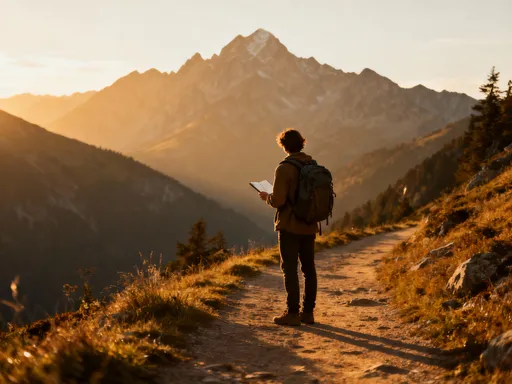
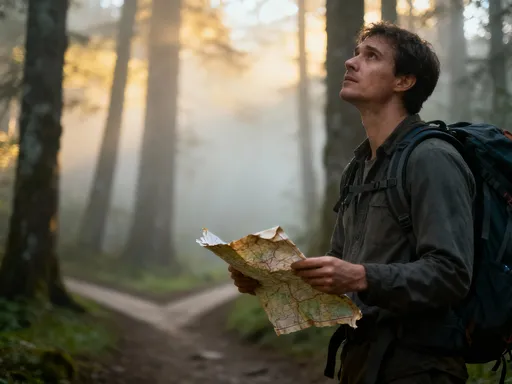
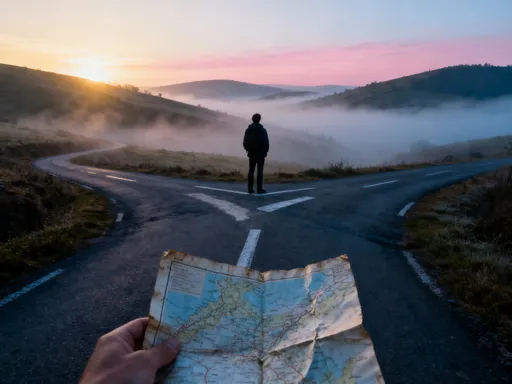
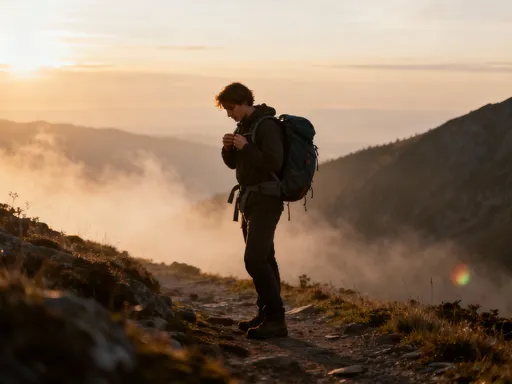
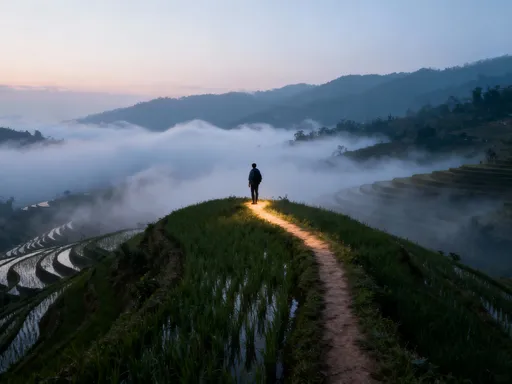
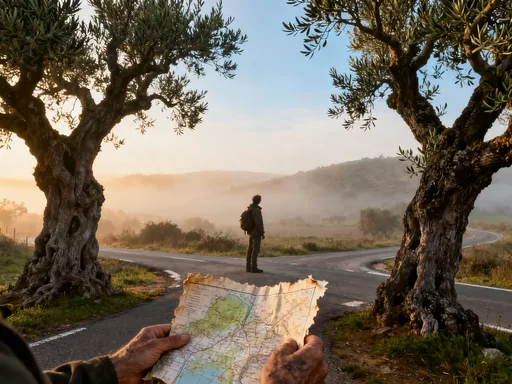
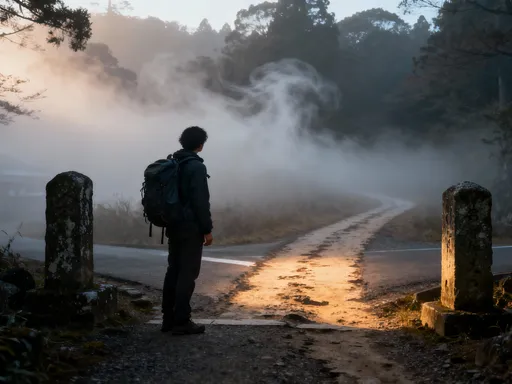
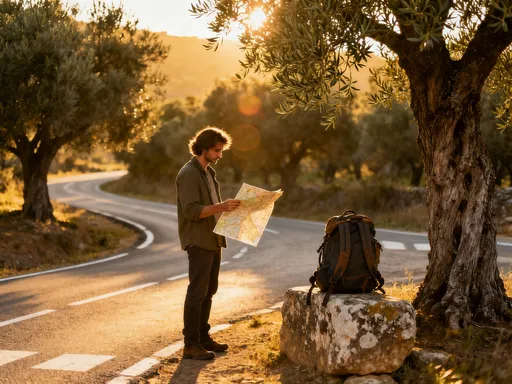
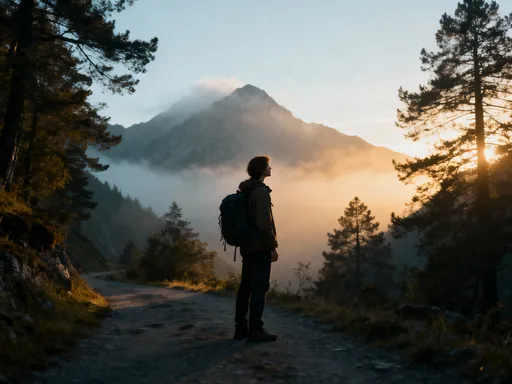
The inner compass of travel is calibrated not by algorithms, but by curiosity, values, and quiet introspection. A 2023 global survey by the World Tourism Organization revealed that 68% of travelers now prioritize cultural connection over luxury accommodations, and 57% say they choose destinations based on personal growth potential. This reflects a deeper desire: to return home not only with photos, but with perspective. Consider the woman pausing at a trailhead in northern Portugal, her backpack heavy with supplies but her heart heavier with uncertainty. She’s followed the guidebooks, booked the hostels, and mapped the Camino de Santiago, yet something feels misaligned. It’s in that pause—the breath before the step—that the true journey begins.
To recalibrate, travelers are encouraged to reflect on past trips. Not the highlights, but the lingering moments: the conversation with a market vendor in Marrakech, the stillness of a mountain dawn in the Rockies, the unexpected laughter shared over a meal in a small Greek village. What stayed with them was not the landmark, but the feeling—a sense of belonging, wonder, or simplicity. These emotional imprints are clues. They reveal what kind of travel nourishes the spirit. Was it solitude or community? Adventure or stillness? Learning or rest? By identifying these patterns, travelers can begin to build journeys that align with their inner rhythm rather than external noise.
The process is not complicated, but it requires honesty. It means resisting the temptation to chase the next “viral” destination and instead asking: what do I need right now? Clarity? Calm? Connection? When intention leads, the destination follows. This is the art of soul-seeing—travel as a mirror, reflecting who we are and who we might become.
Designing for Experience, Not Itinerary
In the age of hyper-connected itineraries and packed schedules, the essence of travel is often lost. Many travelers return from two-week trips with ten countries checked off, yet struggle to recall a single meaningful moment. The problem isn’t the destinations—it’s the pace. An overbooked itinerary turns travel into a performance, not a passage. The antidote lies in designing for experience, not activity. It means shifting the focus from “what to do” to “how it feels.” Immersive travel is not measured in sites visited, but in senses awakened.
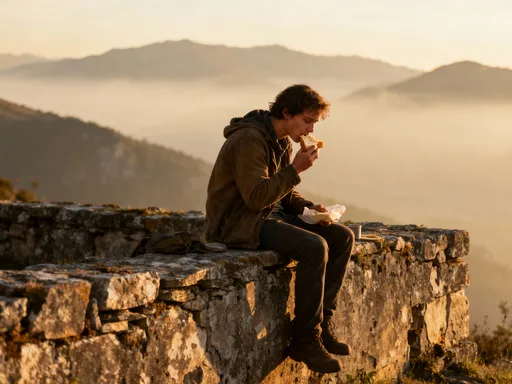
Sensory engagement is the cornerstone of memorable journeys. The scent of rain on warm stone in an Andalusian courtyard, the hum of a morning market in Hanoi, the taste of fresh olive oil on warm bread in Tuscany—these are the textures of presence. Psychologists refer to “memory density,” the number of vivid, emotionally rich memories formed per unit of time. Studies show that travelers who spend three or more days in a single location report 40% higher memory density than those who move every 24 hours. Slowing down allows the mind to absorb, integrate, and internalize.
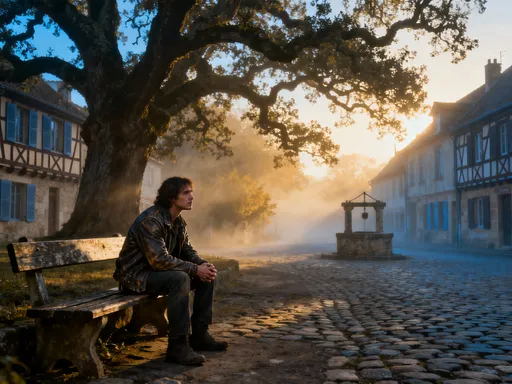
Consider two travelers in Greece. One flies from Athens to Mykonos to Santorini in six days, snapping photos from packed ferries and crowded caldera viewpoints. The other rents a small stone house in a fishing village on Naxos, walks the same path each morning, learns the names of neighbors, and shares meals with local families. Years later, the first may remember the sunsets; the second remembers the people, the conversations, the rhythm of island life. The difference is not the destination, but the depth of engagement.
To cultivate this, travelers can adopt the Experience Cube framework—a simple model built on three dimensions: depth, duration, and discovery. Depth refers to personal involvement—are you observing, or participating? Duration is time spent in place—not just visiting, but dwelling. Discovery is the openness to the unexpected—the unplanned conversation, the wrong turn that leads to a hidden beach. When all three intersect, transformation occurs.
A practical way to begin is through a one-day micro-retreat. Choose a nearby town, park, or cultural site. Leave the phone behind. Spend eight hours moving slowly: sit in a café without ordering, walk without a destination, listen to local dialects, sketch what you see. At day’s end, journal: what surprised me? What moved me? This small act builds the muscle of presence, preparing the traveler for longer, deeper journeys. Experience is not something to be scheduled; it’s something to be felt.
The Hidden Logic of Destination Choice
Choosing a destination is rarely as simple as clicking a button on a travel site. Beneath the surface of brochures and reviews lies a complex decision matrix: climate, culture, crowd levels, cost, and personal energy. The most fulfilling trips result not from random selection, but from alignment—matching the destination’s rhythm with one’s own. Kyoto in April, awash in cherry blossoms and tourists, offers beauty but also chaos. The same city in November, wrapped in mist and autumn reds, provides a quieter, more contemplative experience. Both are “Kyoto,” but they are profoundly different in feel and flow.
Off-season travel is one of the best-kept secrets of intentional tourism. A 2022 study by the European Travel Commission found that destinations visited during shoulder or off-peak seasons reported 30-60% lower accommodation costs and 50% fewer crowds, while local interactions increased by 70%. Fewer tourists mean more space, more time with residents, and a deeper sense of authenticity. In Cinque Terre, the summer crush turns narrow paths into human rivers; in October, the same trails offer solitude and sea views without the shuffle.
Data supports this: a comparison of flight and lodging prices for Lisbon from January to December shows a 45% spike in August, the peak of tourist season, while January offers not only affordability but mild weather and empty museums. The same pattern repeats in cities like Barcelona, Venice, and Bali. Traveling in November to Bali means fewer beachfront crowds, lower villa rates, and the lushness of the rainy season—a different kind of beauty, often overlooked.
Yet logistics alone don’t make a destination right. The key is alignment. A high-energy city like Tokyo may energize one traveler and exhaust another. A remote cabin in Norway’s fjords may offer peace to some, isolation to others. The decision must factor in personal capacity—not just budget, but emotional bandwidth, physical stamina, and desired pace. A mother returning from years of caregiving may crave stillness; a retiree may seek gentle adventure.
To bring clarity, a 10-point scoring system can help vet destinations. Rate each potential trip on criteria such as: personal interest (1-2 points), time available (1 point), budget match (1-2 points), climate suitability (1 point), crowd tolerance (1 point), accessibility (1 point), cultural curiosity (1 point), and emotional readiness (1 point). This structured reflection turns impulse into insight. The highest score doesn’t always mean “best,” but “best for you right now.” When choice is grounded in intention, the destination becomes not just a place, but a purpose.
Practical Alchemy: Turning Research into Readiness
Research is often the most overwhelming part of travel planning. A simple search can lead to hundreds of blogs, conflicting reviews, and endless lists. The goal is not to consume everything, but to curate wisely. Reliable resources include local blogs written by residents, transit forums like Rome2Rio, and niche platforms such as Atlas Obscura for unique experiences. Government tourism sites, while formal, offer accurate, up-to-date information on visas, health requirements, and safety.
Beyond practicalities, research can build emotional readiness. Virtual walk-throughs on Google Earth or YouTube can convey a destination’s vibe before arrival. A 10-minute stroll through the alleyways of Chefchaouen in Morocco, viewed from street-level video, can spark intuition: does this place feel calming or stimulating? Photo essays on platforms like National Geographic or Medium offer narrative depth, showing not just views, but daily life.
Connectivity and accessibility are practical keys. For many travelers, especially those managing health or family needs, knowing the availability of pharmacies, medical clinics, or dietary accommodations is essential. Checking public transit options, walking distances, and accommodation accessibility ensures the trip is not just dreamy, but doable. Rest rhythms matter too: a destination with late-night dining and vibrant nightlife may suit some, but others need early dinners and quiet evenings to recharge.
Community voices add invaluable insight. Reading traveler-to-traveler tips on forums like Lonely Planet’s Thorn Tree or Reddit’s r/travel can reveal nuances guidebooks miss. One traveler might note, “The train from Innsbruck to Lauterbrunnen is scenic, but sit on the right for the best views.” Another might warn, “The hostel in Luang Prabang is clean, but the shared bathroom floods after rain.” These details shape realism and reduce anxiety.
From research, a personalized pre-trip checklist emerges. Rather than generic packing lists, it should reflect priorities. For a cultural immersion trip to Oaxaca, the checklist might include: Spanish phrasebook, local weaving cooperative hours, best mercado days, and a journal for recording recipes. For a wellness retreat in Tuscany, it might list yoga times, meal preferences, and digital detox boundaries. This checklist isn’t about control, but about preparation with purpose. It turns chaos into calm, and uncertainty into readiness.
Navigating Transitions with Grace
The beginning and end of a journey are often overlooked, yet they frame the entire experience. Arrival is more than stepping off a plane—it’s a psychological shift. Jet lag, language barriers, unfamiliar food, and sensory overload can trigger disorientation, even in seasoned travelers. The mind needs time to recalibrate. Rushing into sightseeing on day one can diminish the trip’s potential. Instead, grounding rituals can ease the transition.
A simple walk without a destination, a cup of local tea, or 10 minutes of journaling upon arrival can center the traveler. Some find comfort in repeating a personal phrase: “I am here. I am safe. I am open.” Others light a candle in their room as a symbolic welcome. These small acts create psychological anchors, helping the mind shift from “getting there” to “being here.”
Equally important is the return journey. Reverse culture shock is real, though rarely discussed. After days or weeks of new rhythms, returning home can feel jarring. The familiar suddenly seems loud, fast, or shallow. The traveler may feel restless, disconnected, or even guilty for missing simpler moments abroad. This is normal—a sign of growth.
One powerful way to ease re-entry is through a homecoming ritual. This might include unpacking mindfully—not just clothes, but memories. Lay out souvenirs, photos, and notes. Reflect: what did this trip teach me? Write a letter to yourself summarizing the journey. Share one story with a loved one, not as a report, but as a gift. Some keep a “return day” slow—no appointments, no chores, just tea and reflection.
Imagery helps: stepping back into your life like re-entering a familiar room changed by absence. The space is the same, but you are not. These transitions, honored with care, ensure the journey doesn’t end at the airport, but continues in daily life.
Storytelling as Souvenir
The most lasting souvenirs are not objects, but stories. Yet storytelling is not just about sharing on social media—it’s about making meaning. When travelers journal, record voice memos, or curate photos with intention, they begin the process of integration. A photo without reflection is a data point; the same photo with context—the wind that day, the child who waved, the smell of baking—becomes a memory.
The “story loop” is a simple framework: event, emotion, meaning. First, describe what happened (event). Then, name the feeling it evoked (emotion). Finally, ask: what does this mean for me? (meaning). Sitting in a Kyoto garden, watching leaves fall into a still pond (event), may spark a sense of peace (emotion), leading to the insight: I need more stillness at home (meaning). This loop transforms experience into wisdom.
Encourage one question per day: “What surprised me today?” or “When did I feel most alive?” These prompts gently guide self-awareness. A woman in Seville might answer: “The old woman in the bakery smiled at me for no reason.” That small moment, recorded, becomes a touchstone of human connection.
A powerful closing practice is to write a post-trip letter to your future self. Address it to “You, six months from now.” Include not just what you did, but who you became on the journey. “Remember how you walked without a map in Granada and found that courtyard with the fountain? You were brave. Hold onto that.” These letters, saved or mailed later, become anchors of identity and growth.
The Ripple of Return
The true measure of a journey is not the distance traveled, but the change it leaves behind. The most powerful trips do not end when the suitcase is unpacked. Their legacy lives on in small shifts: a new tolerance for silence, a slower way of speaking, a deeper patience in lines or traffic. These are not grand transformations, but quiet rewirings of the self.
Travel changes posture—not just physical, but emotional. The woman who navigated a foreign city alone carries a different confidence. The retiree who learned to cook tagine in Morocco brings that curiosity to her own kitchen. The mother who sat by the sea in Amalfi returns with a willingness to pause, to breathe, to be.
These ripples extend beyond the individual. They affect how we speak to neighbors, how we approach problems, how we define home. A broader awareness emerges—not of the world’s vastness, but of its interconnectedness. The tea in the morning feels different when you’ve seen the hands that grew the leaves.
The call is not to travel for escape, but for return—to go out so we can come back with eyes open, hearts tuned, and spirits renewed. The world is not a checklist; it is a conversation. And every journey is a sentence in an ongoing story of becoming.
In the final image, the traveler unpacks. But this time, the suitcase is full of more than clothes. It holds lessons: the value of stillness, the beauty of small moments, the courage to wander. She folds them carefully into her daily life, not as memories, but as practices. And as she closes the suitcase, she knows—the journey was never about the destination. It was about who she became along the way.