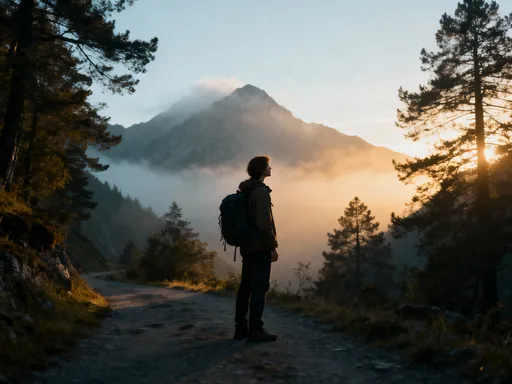
Wander with Purpose: How to Choose Your Next Journey Without Losing Yourself
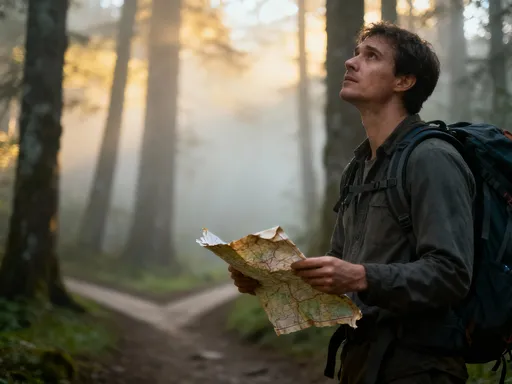
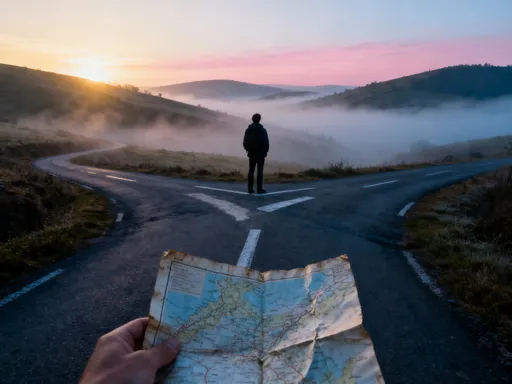
Every year, millions set out in search of wonder—yet too many return unchanged, their itineraries crowded but their souls untouched. True travel isn’t measured in miles or passport stamps, but in moments that shift perspective. What if the right destination didn’t just promise beauty, but resonance? This is not about ticking off landmarks, but about alignment—between place and purpose, rhythm and readiness. The art of meaningful travel begins long before departure: in the quiet act of choosing wisely, preparing thoughtfully, and moving intentionally through the world.
The Heartbeat of a Journey: Why Experience Matters More Than Itinerary
At the core of transformative travel lies not the number of places visited, but the depth of presence felt. A journey measured solely by checklists often results in fatigue, not fulfillment. True transformation occurs when travelers engage with a place beyond its surface—when they stand not just beside ancient ruins or mountain peaks, but within the quiet awareness of how those places shape inner landscapes. The difference between passive sightseeing and active immersion is the difference between observing a river and stepping into its current. Immersion demands openness, patience, and a willingness to be changed by what unfolds.
Emotional resonance frequently outweighs aesthetic grandeur. A traveler may gaze upon the Grand Canyon and feel awe, yet it’s the unexpected conversation with a park ranger, the shared silence at dawn, or the scent of pine after rain that lingers years later. These are the moments that alter how one sees home, relationships, or personal capacity. The most powerful travel experiences are not defined by the camera lens, but by the internal shift they trigger. Feeling at home in a foreign village, even briefly, can be more transformative than a week in a luxury resort where everything remains comfortably familiar.
Personal readiness plays a critical role in shaping such moments. Two people can visit the same destination and emerge with entirely different memories, not because of the place, but because of their internal states. A traveler arriving with stress or emotional exhaustion may overlook subtle beauties, while one moving at a gentler pace may notice the curve of a cobblestone street, the rhythm of market banter, or the warmth in a shopkeeper’s smile. Mindset, emotional availability, and energy levels act as filters through which experience is filtered. Therefore, preparation is not only logistical—it is deeply psychological.
A practical way to honor this is by mapping one’s emotional climate before selecting a destination. This involves honest self-assessment: Is this a season of high energy or one needing restoration? Is curiosity expansive, or is the need for peace more pressing? Some travelers thrive in bustling urban environments, while others require the calm of open landscapes. Understanding one’s current emotional rhythm allows for a destination choice that supports rather than disrupts inner balance. This internal alignment increases the likelihood of meaningful connection, turning a simple trip into a chapter of personal evolution.
Choosing Destinations That Speak Your Language
Every location possesses a distinct tonality—a combination of pace, atmosphere, soundscape, and cultural rhythm. Just as music speaks to mood, so do places. The din of a Tokyo train station carries a different emotional signature than the hush of a Finnish forest at twilight. The wise traveler learns to match environments to their inner state, not simply to a wishlist of sights. This is the essence of resonant travel: choosing not just where to go, but where one will feel most seen, most alive, most at ease.
Data increasingly supports this intuitive approach. Tourism analytics from UNESCO and global visitor satisfaction reports highlight regions that offer high engagement with low overcrowding. For instance, Slovenia’s Julian Alps provide breathtaking alpine scenery with hiking trails that remain uncrowded even in peak season, allowing for solitude and reflection. Similarly, Taiwan’s East Rift Valley, flanked by mountains and rice terraces, offers a slower pace, intimate farm stays, and a deeply rooted agricultural culture. These destinations consistently rank high in traveler contentment, not because they are the most famous, but because they allow for absorption without sensory overload.
Yet many travelers remain drawn to so-called “trophy destinations”—locations that dominate social media, like Santorini, Machu Picchu, or Venice in high summer. While undeniably beautiful, these places often deliver disappointment not because of their inherent value, but because of mismatched expectations and overwhelming crowds. The pursuit of viral moments can lead to long lines, strained interactions, and a sense of performance rather than presence. The pressure to capture the perfect photo often replaces the ability to simply be. The deeper cost is a sense of alienation—being surrounded by people, yet feeling disconnected from the experience itself.
To avoid this, a simple decision matrix can guide destination selection. Begin by identifying mood goals: Is the aim calm, inspiration, or human connection? Then align those with regional characteristics. A desire for calm may point toward coastal retreats in Portugal or forest cabins in Sweden. A need for inspiration might lead to artisan towns in Morocco or literary cities like Edinburgh. For connection, small villages in Vietnam or community-based tourism initiatives in Costa Rica offer deeper interpersonal access. By treating travel as an extension of emotional wellness, rather than mere escapism, the traveler regains agency in crafting an experience that truly nourishes.
The Slow Entry: Arriving with Intent, Not Exhaustion
The way a journey begins shapes its entire arc. Yet most travelers arrive already depleted—jet-lagged, overwhelmed by logistics, and plunged directly into the chaos of transportation hubs or bustling cities. This rushed start sets a tone of reactivity rather than presence. The mind, still processing fatigue and disorientation, is ill-equipped to absorb the nuances of a new place. As a result, the first days—meant to be full of wonder—often become a blur of confusion and sensory overload.
Contrast this with a more intentional arrival. According to a 2022 study by the Japan National Tourism Organization, travelers who began their visit to Kyoto with a silent tea ceremony reported a 42 percent deeper sense of cultural engagement over the course of their trip. The ritual did more than introduce a tradition; it grounded them. It offered a moment to breathe, to center, to emerge from the noise of transit and into the quiet of experience. These travelers were not just seeing Kyoto—they were beginning to feel it.
A more mindful entry strategy involves designing the first twenty-four hours as a transition, not a task list. This means building in buffer zones—time without agenda, space without destination. Instead of rushing to a hotel, consider a short walk through a nearby neighborhood. Let the foreignness sink in gradually: the sound of language, the pattern of footsteps, the scent of street food. Allow the senses to recalibrate. Some travelers carry a small ritual—a few minutes of journaling, a grounding breath, or a moment of gratitude—helping to anchor awareness in the present.
One powerful tip is to replace the standard airport transfer with a meditative transition. Opt for public transport if safe and feasible, or walk part of the way from the station. Listen to local music instead of checking emails. Write down three intentions for the journey: perhaps to listen more, to move slowly, to say yes to small invitations. These subtle shifts do not alter the itinerary, but they transform the internal experience. When arrival is treated not as a hurdle but as the first act of engagement, the entire journey unfolds with greater clarity and depth.
Beyond the Guidebook: Unlocking Layered Experiences
The limitations of the traditional guidebook are increasingly clear. It can direct one to the best museums, the most scenic viewpoints, and the top-rated restaurants—but it cannot guide a soul toward meaning. Surface-level tourism delivers curated snapshots, often disconnected from the living culture beneath. In contrast, multidimensional engagement invites travelers to move through layers of experience, peeling back the obvious to discover what endures.
Experts in meaningful travel often use what is known as the “layer cake” method. Begin with something tangible and accessible—like food. Taste a dish in its place of origin. Then, go deeper: learn how it is made. Visit a market, speak with a vendor, join a cooking class. The next layer is craft—the knowledge behind the meal, the generational wisdom in the recipe. Finally, reach the human layer: conversation with a family, a story about how the dish survived hardship, or how it marks celebration. Each layer builds on the last, transforming a simple meal into a portal of connection.
A real-world example lies in Oaxaca, Mexico. A traveler might begin by sipping mezcal at a bar. But attending a small-batch workshop with a local palenquero opens new dimensions. The artisan explains the agave’s eight-year growth cycle, the sacredness of the harvest, the role of fire and earth in distillation. Soon, the drink is no longer just alcohol—it is memory, land, and lineage. Staying longer, the traveler may be invited to a home, hear family histories, or witness a blessing before brewing. These moments are not found in apps or brochures. They arise from curiosity, respect, and the courage to go beyond observation.
To encourage such experiences, travelers should identify access points before departure. Look for local classes, community bulletin boards, neighborhood walking groups, or cultural centers offering short workshops. Many cities have “slow tourism” collectives that connect visitors with residents for authentic exchanges. The goal is not to collect experiences, but to participate in them. Rather than watching a dance performance, join a beginner’s session. Instead of photographing a craftsperson, ask to try a simple stitch or pattern. These small acts of engagement open doors that no ticket can buy.
The Rhythm of Exploration: Pacing for Presence
There remains a persistent myth that travel should be productive—that every hour must be filled, every opportunity seized. This mindset, borrowed from daily life, often backfires. The more packed the schedule, the less one retains. Cognitive science confirms this: according to the European Travel Psychology Review (2023), the brain reaches peak cognitive load after three intense activities in one day. Beyond that, new information is not absorbed—it is merely endured. The traveler may “see” ten sites, but remember only fragments of fatigue.
True depth comes not from doing more, but from allowing space between. Just as music depends on silence to give notes their meaning, so does travel depend on stillness to give moments their weight. A market’s vibrant energy is more appreciated after sitting quietly in a garden. The details of a cathedral’s architecture become clearer after a half-hour of sketching or journaling. The rhythm of exploration—when balanced—creates flow, not fragmentation.
To build this balance, travelers can adopt a “pulse schedule”: two hours of outward activity followed by one hour of inward pause. After visiting a museum, sit beneath a tree and reflect. After a walking tour, return to a café and write a few lines in a notebook. These respites need not be elaborate—simply moments to breathe, to feel the sun, to listen without agenda. They allow the nervous system to reset and the mind to integrate. Over time, this pattern cultivates presence, turning each experience into something that can be carried forward.
This rhythm also respects biological reality. Travel is physically taxing—new time zones, unfamiliar food, constant decision-making. Without rest, the body and mind rebel. Fatigue breeds irritability, dulls perception, and weakens connection. By honoring natural cycles—energy and rest, input and reflection—the traveler remains open, alert, and emotionally available. This is not laziness, but wisdom. It is the recognition that the deepest discoveries often come not in motion, but in stillness.
From Observation to Belonging: Crafting Small Acts of Connection
Many believe that meaningful connection during travel requires fluency in language or cultural expertise. This is a misconception. Connection is built not through perfection, but through gesture, presence, and genuine curiosity. A smile, a patient ear, a simple “thank you” in the local tongue—these small acts create ripples. They signal respect. They open doors that grand gestures often cannot.
Consider the woman in Lisbon who, instead of photographing an elderly fisherman mending his net, sat nearby and gestured to ask if she could watch. Over the next hour, with minimal words, he showed her how the knots were tied. She returned the next day with tea. By the end of the week, she was introduced to his family. That single exchange became the emotional core of her trip—not because it was dramatic, but because it was real.
Such moments are not accidents. They are nurtured by intention. Travelers can set a daily “micro-bond” goal: learn one person’s name, receive a story, share a meal, or give a small gift of time. These are not transactions, but invitations to mutual recognition. They quiet the role of the observer and awaken the role of the participant. In doing so, they dissolve the illusion of separation between “visitor” and “local.”
Of course, ethical engagement matters. Curiosity must be balanced with humility. Intrusion, no matter how well-intentioned, disrupts. The key is to listen first, to follow cues, and to offer presence without demand. Tourism should not turn lives into performances. Instead, the goal is reciprocal exchange—where both traveler and host give and receive something of value. When this balance is achieved, connection becomes not a highlight, but a foundation.
Returning Changed: Closing the Loop with Reflection
The final act of travel begins not at the destination, but at re-entry. After days or weeks of immersion, returning home can feel disorienting. Familiar surroundings may seem strange. Daily routines may feel flat. This phenomenon, known as post-travel dissonance, affects 68 percent of sensitive travelers, according to the Global Wellbeing Travel Report (2023). The outer journey has ended, but the inner journey is still unfolding.
To honor this transition, travelers should create a return ritual. This might involve unpacking luggage slowly, setting aside items that carry memory—a smooth stone, a pressed flower, a ticket stub. More importantly, unpack the intangible: write down insights, emotions, epiphanies. Did a quiet moment in a Spanish plaza shift your view of time? Did a conversation with a stranger reframe your understanding of generosity? These reflections are the true souvenirs.
The legacy of a journey should not be limited to photo albums. It should be woven into daily life. Share not just images, but stories—tell how a morning in Kyoto taught you stillness, or how a homestay in Guatemala deepened your appreciation for simplicity. Gift not trinkets, but retellings. Offer your children or friends a recipe learned abroad. Play music from the region. These acts keep the journey alive and allow its wisdom to ripple outward.
Ultimately, every departure is a quiet promise. A promise to wander with purpose, to choose destinations not for status, but for soul alignment. To move through the world with soft eyes, a wide heart, and the courage to be changed. In a culture that often measures travel by distance or duration, the true metric is depth. And depth begins not on the map, but in the mind. Let the next journey be one not of escape, but of return—to a wider self, a deeper presence, and a more connected world.