Where Journeys Unfold: The Quiet Art of Choosing Where to Go Next
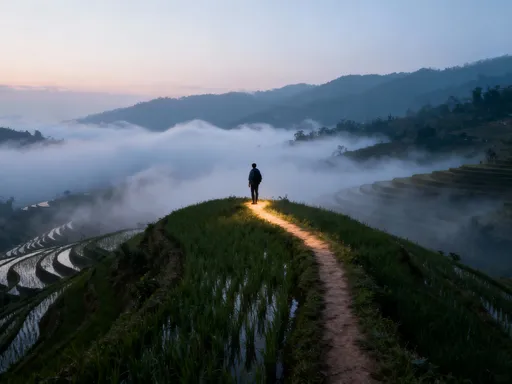
Every traveler has felt it—the quiet pull of a destination not found on any trending list, a place that promises more than scenery, but transformation. In a world flooded with itineraries and influencers, choosing where to go is no longer about checking landmarks off a list. It’s about alignment: with mood, with moment, with meaning. This guide illuminates how thoughtful destination choices, paired with intentional preparation, turn travel into a quiet act of self-discovery. From mountain villages whispering resilience to coastal paths echoing stillness, the right journey doesn’t just move you across maps—it shifts you within. When travel becomes a mirror, the landscapes we seek are reflections of those we carry inside.
The Mindset of Meaningful Movement
Travel, at its core, is not a break from life but an extension of it—an outer journey that accompanies an inner one. What often distinguishes a forgettable trip from a life-altering passage is not the distance traveled but the depth of mind brought to it. Approaching travel as a reflective practice invites a fundamental shift: from consumption to connection, from observation to participation. This transformation begins long before departure, rooted in mindset. The most powerful travelers are not those with the longest passports, but those who travel with presence rather than productivity as their compass. Curiosity, not convenience, becomes the guide. This allows experiences to unfold rather than be forced, creating space for meaning to settle like dust in sunlight.
Psychological research underscores the quiet benefits of this approach. According to a 2022 study from the University of Exeter, immersive travel experiences—those entered with openness and reduced mental clutter—correlate with improved emotional regulation and lowered cognitive fatigue. The brain, unburdened by performance demands, regains clarity. This is not merely relaxation; it is recalibration. When travelers shed the need to document every moment or reach every site, they free up mental bandwidth for deeper perception—smelling the damp earth after rain in a village alley, noticing the pattern of light on ancient stone, hearing laughter drift from a courtyard. These sensory imprints form the true souvenirs of travel, far more enduring than photographs.
So how does one cultivate this inward readiness? Preparation begins not with packing but with pausing. Simple pre-trip rituals can create mental space. A few days before departure, taking twenty minutes in quiet reflection—journaling, meditating, or simply sitting—can act as a cleanse. Intention setting offers direction: “I travel to listen more deeply” or “I go to release what no longer serves me.” Mental unloading exercises, like listing worries and symbolically setting them aside, lighten the internal load. A packed suitcase is often lighter than a cluttered mind. As one traveler reflected after a silent retreat in northern Portugal, “I didn’t realize how much noise I carried until I walked into silence—and finally heard myself.” Before you go, pause, and ask: What do I need to release before I arrive somewhere new?
Destination Alchemy: Beyond Popularity
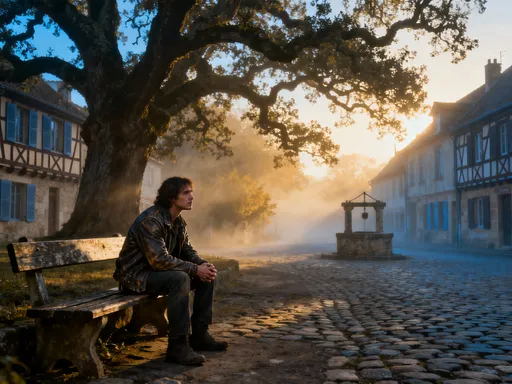
Choosing a destination should feel less like selecting a product and more like answering a quiet question. What does your heart need right now—stillness, rhythm, warmth, wonder? The most resonant places are not always the most photographed. They are the ones that align with your inner state, offering not just views but validation. A destination’s true value lies beyond its visual appeal; it resides in its rhythm—the pace of daily life, the texture of community, the authenticity of seasonal change. These qualities form what might be called a “soul index,” a personal measure of a place’s capacity to meet you where you are. It is found in the unhurried greeting of a shopkeeper, the sound of bells at dusk, the absence of crowds on a forest path.
The overexposure of popular destinations often dilutes this essence. According to the United Nations World Tourism Organization (UNWTO, 2023), 76% of historic cities worldwide now exceed sustainable visitor thresholds, transforming sacred sites into photo ops and local markets into souvenir stalls. The cost of overtourism is not only environmental but emotional—travelers leave feeling drained rather than renewed. Yet, data also reveals an alternative: lesser-known or off-season locations frequently yield richer, more intimate experiences. Villages in the Slovenian Alps during shoulder season, or fishing towns along Portugal’s Alentejo coast in late autumn, offer the same beauty without the burden of expectation. The air feels clearer, the interactions more genuine.
So how does one uncover these resonant places? Begin by shifting the tools of search. Instead of relying on mainstream platforms, explore local blogs written by residents, not promoters. Use off-peak satellite imagery to identify areas with minimal light pollution or congestion. Seek out community-led initiatives—farm stays, craft workshops, walking pilgrimages—where tourism supports, rather than displaces, local life. Create a “stillness map” of potential destinations by noting accessibility to quiet zones: forests, monasteries, empty beaches, highland trails. The goal is not isolation, but intimacy. As one traveler shared after a spring pilgrimage in Le Marche, Italy, “I didn’t see a single influencer. I saw women hanging laundry, men pruning olives, children chasing goats. I felt like I’d stepped into a forgotten rhythm—and my soul caught up.” Travel flavor grows in the uncurated.
The Rhythm of Ideal Timing
Timing is often reduced to weather forecasts and flight prices, but true optimal timing is more nuanced. It is the alignment of three rhythms: the destination’s seasonal pulse, the traveler’s personal energy cycle, and the cadence of local life. A place visited at the wrong time—crowded during peak season or closed during off-season—can feel like a stage without actors. Kyoto in April offers misty mornings that wrap temples in quiet, allowing contemplation. Yet during cherry blossom season, the same paths buzz with photo-seekers, turning stillness into spectacle. The difference lies not in the destination, but in the timing. Choosing when to go is as vital as choosing where.
Evidence supports this. Eurostat’s 2022 data shows that Mediterranean regions experience up to a 300% increase in daily visitors during peak summer months, drastically altering the traveler experience. In contrast, visiting coastal southern Spain in October means warm evenings, empty hiking trails, and open conversations with fishermen mending nets. Beyond crowds, timing affects emotional availability. A person recovering from burnout may crave low-stimulation environments. Planning a high-energy city tour during this phase can amplify fatigue, whereas a slow coastal walk or a lakeside cabin stay supports recovery. Introverts, in particular, benefit from aligning travel with personal energy levels—opting for early mornings, remote hikes, or midweek visits to avoid sensory overload.
To navigate this, travelers can create a personal “energy calendar” alongside traditional planning tools. This simple exercise involves mapping one’s typical weekly energy patterns—when focus is high, when rest is needed—and matching them to potential destinations. A high-energy week may suit a cultural city with museums and walks; a low-energy window may call for a retreat in nature with minimal agenda. Pair this with climate charts, local festival schedules, and satellite crowd data (available through platforms like Google’s Popular Times). The result is not just a well-timed trip, but a well-matched one—one that meets the traveler at their current threshold. True timing honors both external conditions and internal tides.
Pathfinding with Purpose
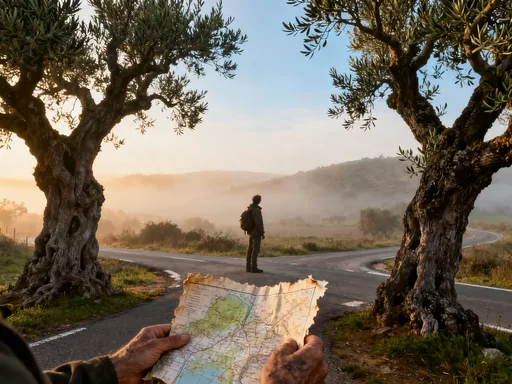
An itinerary should not be a prison of precision but a framework for possibility. What makes a journey meaningful is not the number of sites visited, but the depth of presence cultivated along the way. Rigid schedules, with their minute-by-minute assignments, often lead to fatigue, not fulfillment. They replace discovery with delivery, turning travel into a performance. In contrast, a loose, “open-loop” structure allows for spontaneity—the unexpected conversation with a local gardener, the detour to a hidden courtyard, the hour spent watching clouds over a lake. These unplanned moments are where memory forms most vividly.
Neuroscience supports this. A 2021 study from the Max Planck Institute found that novel, unstructured experiences activate the hippocampus more strongly than predictable ones, enhancing long-term memory and emotional integration. When travelers allow space for the unknown, they engage more fully with the present. A meaningful itinerary, then, functions like a jazz score—structured enough to guide, open enough to improvise. It includes anchor moments—dawn at a lakeside market, midday at a quiet museum, sunset on a coastal path—but leaves the intervals unscripted. These gaps are not empty; they are invitations.
One effective method is the “three-marker” day: morning, threshold, and return. Morning sets the tone—perhaps coffee in a sunlit plaza. Threshold marks a key experience—visiting a historic site or joining a local walk. Return allows for reflection—dinner in silence, journaling, or a slow walk back. Between these points, the traveler moves with curiosity, not compulsion. A pre-trip exercise can support this: draft a single day with only these three time markers. Resist the urge to fill more. This practice builds trust in the journey itself, not just its outcomes. As one woman from Vancouver shared after a trip to rural Umbria, “I stopped scheduling happiness. I let it find me—and it did, in a small bakery, over a shared table, with no words, just bread and sunlight.” Purposeful pathfinding means designing for presence, not productivity.
The Language of Belonging (Without Speaking)
Belonging in a foreign place does not require fluency in its language. Often, it begins with gesture, rhythm, and respect. Nonverbal connection—shared eye contact, a nod, the pace of walking through a village—can create bridges no translation app can replicate. These moments, small and silent, carry weight. They signal recognition: “I see you, and I am here as a guest.” Attempting even a few words in the local tongue—greetings, thank yous, a simple “may I”—transforms the traveler from observer to participant. It is not about perfection, but effort.
Qualitative research from GlobeHopper Insights (2023) found that travelers who attempted local phrases, even poorly, reported a 40% stronger sense of welcome from residents. This is not because locals expect fluency, but because effort signals respect. A shopkeeper in rural Morocco once told a traveler, “You say ‘salam alaikum’ with broken tongue, but clean heart. That is enough.” These micro-gestures open doors—invitations into homes, side glances turned into smiles, directions given with extra care. They are the roots of belonging.
Preparation for this begins before departure. Learn five essential phrases not for utility alone, but for resonance: how to greet, how to thank, how to ask permission. Practice them aloud. Carry a small notebook with them written down. Observe silence zones—religious sites, early mornings in villages—and move gently through them. Respect the rhythm of daily life—when shops close, when meals are shared, when streets grow quiet. These acts of attunement create a shared language beyond words. Understanding begins in effort, not fluency. As one woman from Melbourne discovered in a quiet village in northern Greece, “I spoke no Greek, but I sat daily at the same bench, nodded to the same women, smiled at the same cat. By the end, they brought me tea. I belonged—not by speaking, but by showing up, again and again.”
Packing Light, Living Full
Packing is often seen as a logistical challenge, but it is also a psychological one. What we bring reflects what we fear—cold, discomfort, invisibility. Yet every added item weighs not just the suitcase but the spirit. The act of packing light is not about deprivation but about intention. It is a declaration: “I am ready to receive, not just to carry.” Travelers who minimize physical load often report greater agility, openness, and engagement. A 2020 study from the Journal of Travel Research found that travelers with carry-on-only luggage visited 30% more unplanned sites, citing reduced stress and increased mobility.
Reframing packing as presence-building changes the process. Instead of asking “What might I need?”, ask “What will serve me—body, heart, or habit?” Choose items that multitask: a lightweight scarf that warms in the evening, doubles as a cover-up in sacred spaces, and comforts when wrapped around shoulders during a reflective pause. Select footwear that supports long walks and transitions seamlessly from trail to town. Limit toiletries to essentials—many destinations offer quality local products. Each decision becomes a practice in discernment.
One powerful exercise is the “one-object challenge”: bring only one non-essential item that holds deep personal meaning—a stone from a garden, a small photo, a worn book. This object becomes an anchor, not a burden. It reminds you of who you are beneath the role of traveler. A woman from Toronto brought her grandmother’s hand-knit shawl on a trip to Iceland. “It wasn’t about warmth,” she said. “It was about carrying a piece of love into a vast, wild place. It kept me grounded.” When packing is an act of curation, not accumulation, it clears space—not just in the bag, but in the heart.
Return with More Than Photos
The journey does not end at the airport. The true measure of travel is not how far we went, but how deeply we return. Lasting integration means bringing home not just souvenirs, but shifts in mindset—slower breathing, deeper listening, a renewed sense of wonder. Yet without reflection, these changes can fade like footprints in sand. The return is its own phase, deserving ritual and care. Just as departure benefits from preparation, arrival benefits from intention.
Creating a return ritual supports this transition. Unpack slowly, not all at once. Lay out your clothes, your journal, your small treasures, and let them tell the story again. Write a letter to your pre-trip self—what did you hope for? What did you find? Did you meet your intention? This act closes the loop and honors the journey. Integrate one small habit from the destination: a morning tea practice, a daily walk without devices, a moment of silence before meals. These acts are not imitation, but integration—they keep the spirit of the place alive in your daily life.
Habit formation models, such as those from behavioral psychology, show that new behaviors take root more easily when tied to meaningful experiences. A traveler who walks each evening in a Spanish village may bring that rhythm home, walking her neighborhood path with the same presence. This is how travel transforms from escape to evolution. It is not about leaving life behind, but about returning to it with more awareness, more gratitude, more courage.
Travel, at its best, is not an escape from the everyday. It is a quiet rehearsal for becoming more fully present—to the world, and to oneself. Each journey, carefully chosen and deeply lived, becomes a thread in the fabric of a richer, more intentional life. The right destination does not always dazzle. Sometimes, it simply mirrors back the truth we needed to remember: that we are capable of wonder, of stillness, of belonging—anywhere, and especially at home.